
How Clogged Downspouts Cause Water Problems During Florida Storms
When people think about gutter maintenance, they usually picture leaves piling up in the horizontal troughs along the roofline. But the downspouts — those vertical pipes that carry water from the gutters to the ground — are just as important. In fact, a clogged downspout can turn a properly maintained gutter system into a liability, especially during Florida’s summer storm season.
On the Treasure Coast, afternoon thunderstorms can drop two or three inches of rain in less than an hour. That kind of volume puts every part of a home’s drainage system to the test. When downspouts are blocked, water backs up fast — and the damage can spread to places most homeowners don’t think to check until it’s too late.
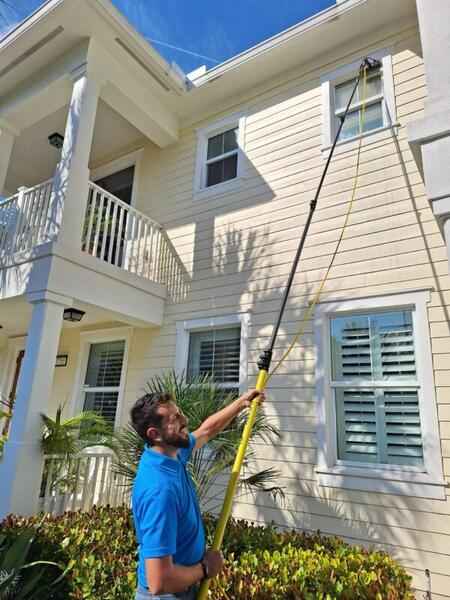
Why Downspouts Matter as Much as Gutters
Gutters collect water; downspouts move it away. It’s a simple partnership, but one that breaks down quickly when either side fails.
A typical downspout on a Treasure Coast home needs to handle hundreds of gallons of water during a single heavy storm. When it’s clear, that water flows through the downspout and out the bottom, where it should be directed at least four to six feet away from the foundation. When it’s blocked — by pine needles, roof granules, dried leaves, or even the nests of small animals — the entire system backs up. Water spills over the gutter edges, runs down the side of the house, and pools around the foundation.
In coastal areas like Juno Beach or Jupiter, the problem can be compounded by salt-laden air that accelerates corrosion on metal components and helps organic debris stick to the inside of downspouts rather than washing through.
The Domino Effect: How One Clog Creates Multiple Problems
A clogged downspout doesn’t just cause one issue — it sets off a chain reaction that can affect several areas of a home.
Foundation and slab damage
This is the most expensive risk. When water pools repeatedly at the base of a downspout, it can saturate the soil around the foundation. Over time, this moisture can seep into concrete slabs, causing cracks, settling, or even structural issues. Florida’s sandy soil drains relatively well compared to clay-heavy regions, but that doesn’t make foundations immune — especially when the same spot gets saturated storm after storm.
Landscape erosion and plant damage
Overflow from a clogged downspout often lands directly on flower beds, shrubs, or lawn areas below. The concentrated flow can wash away mulch, expose roots, and drown plants that aren’t suited to standing water. For homeowners who have invested in landscaping, the repair costs add up quickly.
Roof edge and fascia damage
When downspouts clog, water sits in the gutters longer than it should. In Florida’s humid climate, that standing water accelerates rust on metal gutters and rot on fascia boards. It also creates a breeding ground for mosquitoes — a concern that’s top of mind for anyone who’s spent a summer evening on a Treasure Coast patio.
Siding and exterior wall staining
Water overflowing from clogged gutters runs down exterior walls, leaving behind dirt, algae stains, and mineral deposits. On light-colored stucco or siding, these streaks are hard to miss and harder to clean.
Warning Signs Your Downspouts Aren’t Draining Properly
You don’t always need a ladder to spot a downspout problem. Here are signs that can be noticed from ground level:
- Water pouring over the gutter edge during rain, especially near downspout connections
- Staining or algae growth on the exterior wall below a downspout
- Soil erosion or a depression in the ground where the downspout discharges
- Plants or weeds growing out of the gutter or the top of the downspout
- Downspouts that pull away from the wall, indicating extra weight from trapped water and debris
If a downspout has an underground drain line — common in many Florida neighborhoods — a clog can be harder to detect. Water may back up invisibly until it surfaces as a wet spot in the yard or, worse, moisture in a nearby wall.
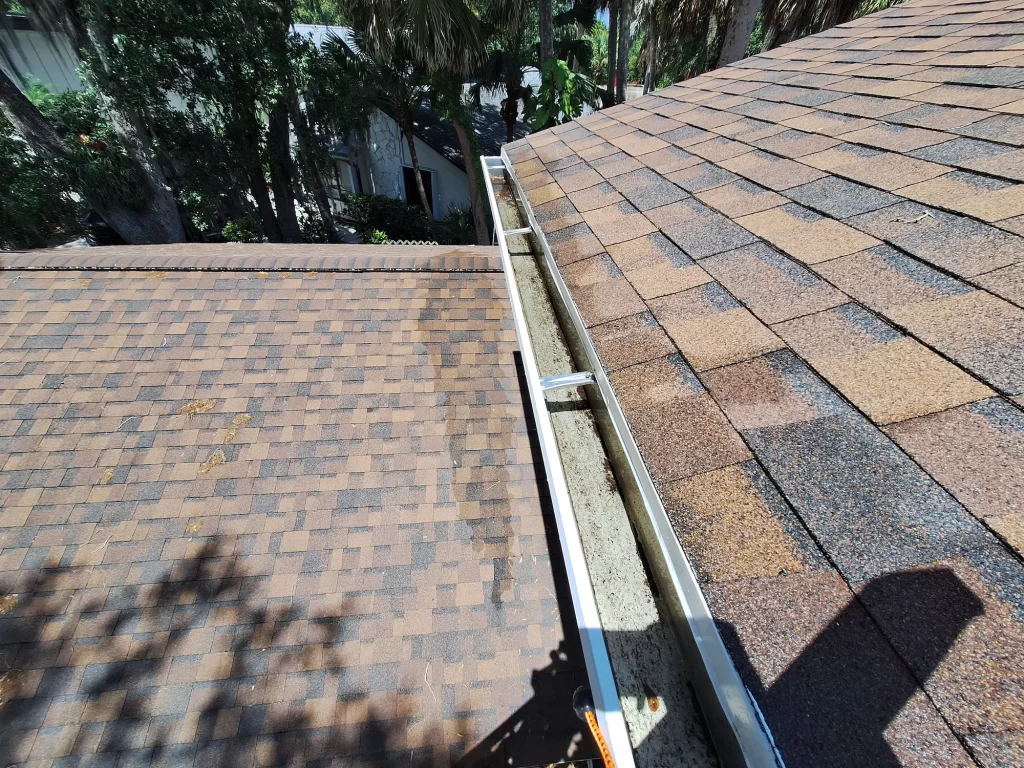
What Professional Gutter Cleaning Actually Covers
A thorough professional gutter cleaning goes beyond scooping leaves out of the horizontal troughs. A proper service includes:
- Clearing all gutters of debris by hand
- Flushing downspouts to confirm water flows freely from top to bottom
- Checking downspout connections and re-securing any that have come loose
- Inspecting for signs of rust, sagging, or separation from the fascia
- Testing underground drain lines where accessible
This kind of full-system attention catches small problems before they become expensive ones. For homeowners across the Treasure Coast — from Port St. Lucie to Palm Beach Gardens — scheduling a cleaning before the peak of summer storm season is one of the most practical steps you can take to protect your property.
As we covered in our guide to gutter cleaning before summer rains, the weeks leading into June and July are when Florida’s weather patterns shift into high gear. Getting ahead of that schedule makes a real difference.

Keep Your Gutters and Downspouts Ready for Storm Season
Florida’s summer weather doesn’t wait for anyone. A downspout that flows freely today can become blocked after the next windstorm deposits a fresh load of palm fronds and pine needles on your roof.
If you haven’t had your gutters and downspouts checked this season, now is a good time. At Laurel Oak Services, we clean gutters by hand and flush every downspout to make sure water goes where it should — away from your home.
Give us a call or text at 561-406-8558 to schedule a gutter cleaning, or visit our services page to learn more about what we offer.
 Posted on Google
 Jan Holler
Trustindex verifies that the original source of the review is Google.
Laurel Oak Services has cleaned my windows and gutters several times. The process they use leaves windows spotless and they stay clean for a long time. Alex and Latizia are punctual, profesional and pleasant, and their pricing is fair. I enjoy seeing clearly!Posted on Google Charlotte HallA great team! Professional, friendly, efficient and reliable … who could ask for more! Highly recommend.Posted on Google
 4mklor KlorfeinThey do such a great job and such wonderful people. They’re a pleasure to have and support their business.Posted on Google
 Naomi kennedythese people were efficient, prompt, and very professional to work with. I would recommend them very highly.Posted on Google
 Beth SThrilled to have found Laurel Oak services, a one stop solution for window, screen, and gutter cleaning. We could not have been happier with the quality of their services and in fact have already scheduled for next year . Wonderful to work with and fair pricing . Highly recommend!Posted on Google
 Kirk AndrewsGreat service. Highly recommendedPosted on Google
 Bridget ShuelThey did an amazing job! Husband & wife team were very professional, efficient & detail oriented.Posted on Google
 Mary Anne NeherFantastic CompanyPosted on Google
 Sharon WesterfieldAlex and Leticia are very efficient and thorough. They don’t delay. Did a wonderful job. I highly recommend themPosted on Google
 Traci SmallWonderful company, quick response time and so pleasant to deal with. Great communication and I’ve already booked my next appointment!! Very highly recommend!Verified by TrustindexTrustindex verified badge is the Universal Symbol of Trust. Only the greatest companies can get the verified badge who has a review score above 4.5, based on customer reviews over the past 12 months. Read more