
Hard Water Stains on Windows in Hobe Sound, FL: What Causes Them (and How to Remove Them Safely)
If you live in Hobe Sound, you already know the trade-off: gorgeous sunshine and salty breezes… and windows that seem to spot up the minute you finish cleaning them. One of the most common questions we get from homeowners here is, “Are these hard water stains permanent?”
In this guide, we’ll break down what causes those cloudy white spots and streaks on your glass (it’s not just ‘dirty water’), what you can safely try at home, and when it’s smarter to call for professional window cleaning in Hobe Sound. We’ll keep it practical and homeowner-friendly.
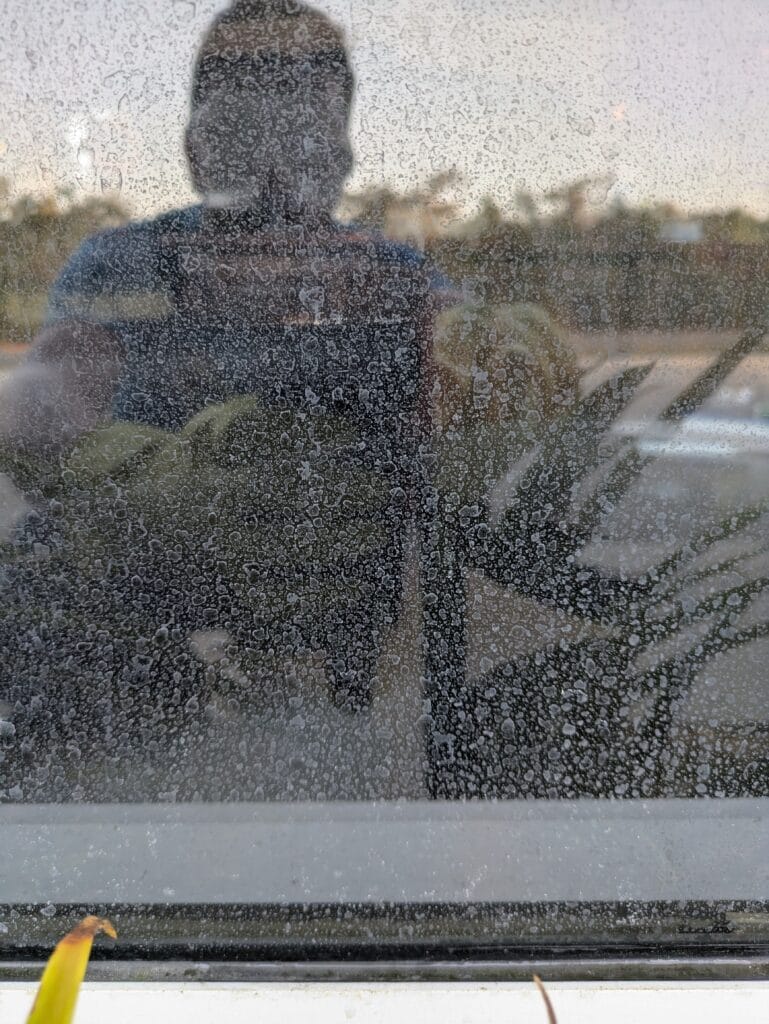
Why hard water stains happen so often in Hobe Sound
Hard water stains are mineral deposits that get left behind when water evaporates on glass. In South Florida, the mix of heat + humidity makes evaporation happen fast—so minerals don’t get rinsed away, they get baked on.
It’s usually sprinklers—not rain
Most of the worst staining we see in Hobe Sound comes from sprinkler overspray—especially if you’re on well water or reclaimed water. That water can be loaded with calcium, magnesium, and iron. When it hits hot glass in the afternoon, it dries into a chalky haze and little ‘constellation’ dots that feel impossible to wipe off.
Coastal air adds a sticky layer
Even if you’re not right on the beach, salty air off the Intracoastal and ocean carries fine particles that cling to glass. That thin film makes minerals grab on harder, so a simple rinse doesn’t do the job.
Quick clue: If the spots show up in the same pattern every time—usually along the lower panes or one side of the house—it’s almost always sprinkler pattern + wind direction.
Will hard water stains damage your glass permanently?
Sometimes yes—but not in the dramatic ‘your window is ruined overnight’ way. The risk comes from something called etching, which is when minerals and water chemistry slowly rough up the surface of the glass.
Stains vs. etching: in plain English
Stains are deposits sitting on top of the glass. They can usually be removed with the right process. Etching is damage to the glass surface itself. If the glass feels slightly rough or looks permanently cloudy even after cleaning, it may be etched.
Why Florida makes it worse
Our clients in Martin County deal with frequent afternoon storms, intense sun, and lots of irrigation. Add in pollen season (and yes—Saharan dust when it rolls through), and you get a gritty mix that can trap minerals against the glass.
We recently helped a homeowner in the Loblolly area who thought they needed new windows because everything looked milky. In reality, the glass was coated in sprinkler minerals. Once we removed the buildup and detailed the frames and sills, their view was back—and they avoided an expensive replacement quote.
What you can safely try at home—and what to avoid
We’re big believers in homeowners understanding their own home maintenance. A few gentle habits can slow down hard water staining—especially if you catch it early.
Safer DIY steps for light buildup
Start with a thorough rinse (hose or bucket) to remove grit. Then wash with a mild soap solution and a microfiber or soft applicator. Dry with a squeegee or clean microfiber towel—letting it air-dry is how spots return.
If you still see haze, a 50/50 mix of white vinegar and water can help on light mineral deposits. Apply, let it sit briefly, then rinse well. (And always test a small corner first.)
What we don’t recommend
Avoid steel wool, abrasive pads, and ‘miracle’ powders. They can scratch glass or damage coatings. Also be careful with harsh acids—improper use can etch glass, discolor frames, or drip onto landscaping.
If you’re seeing thick white crust, rough texture, or years of buildup, DIY usually turns into frustration (and sometimes damage). That’s when it’s worth getting a pro involved.
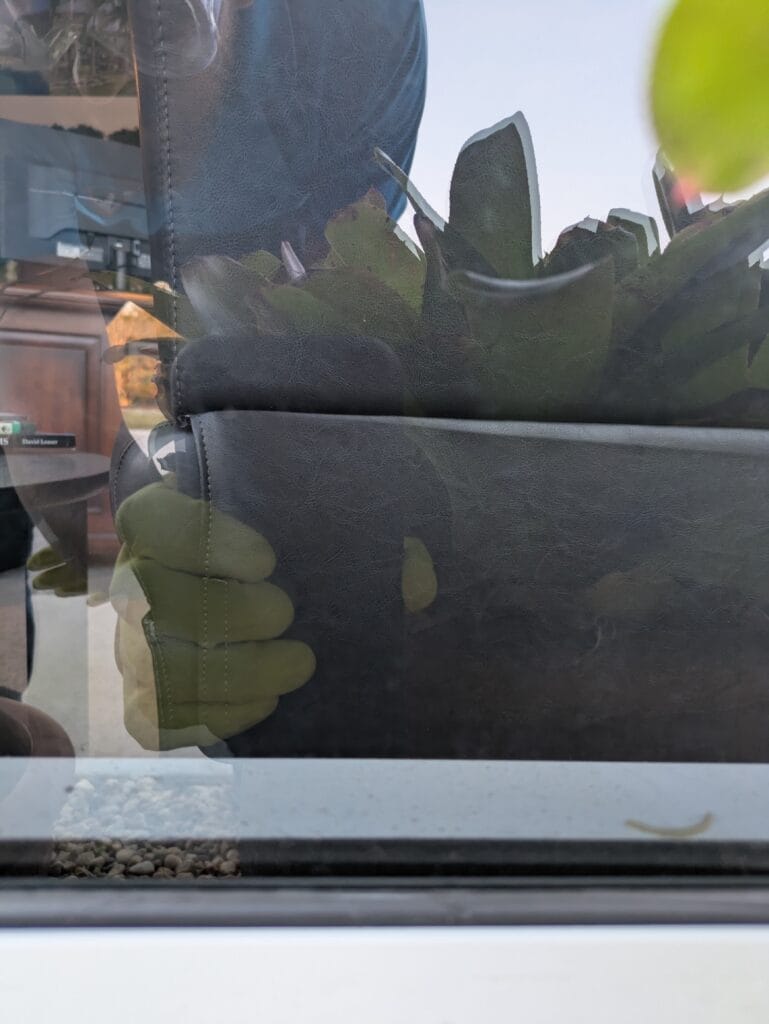
How we remove hard water buildup—the professional way
Hard water stain removal isn’t the same as a standard wash. The goal is to break down mineral deposits without harming the glass, seals, or surrounding surfaces. When we do window cleaning in Hobe Sound, we start by protecting the home—then we choose the right method based on what the glass is telling us.
Our approach: gentle first, targeted when needed
We typically begin with a detailed wash and rinse, then use a professional window-grade acid treatment designed to dissolve mineral deposits. It’s applied in a controlled way and thoroughly rinsed so the glass (and surrounding surfaces) stay protected.
And here’s the part most ‘splash and dash’ services skip: we detail the frames, sills, and edges. A clean pane doesn’t stay clean if dirty tracks and mineral residue keep bleeding back out the next time it rains.
Because Laurel Oak is a husband-and-wife owner-operator team, you’re not getting a random crew. When you call, you get us—Alex & Letizia—and we’re fully insured. If you want to see all of our exterior cleaning options (windows, screens, gutters, and lanai work), you can check out our full services here.
A simple prevention tip that saves money
If sprinklers are hitting your glass, adjust the heads (or add a buffer zone) and avoid watering during the hottest part of the day. Even a small change can dramatically reduce spotting.

Laurel Oak Services: Your Window Cleaning Experts
At Laurel Oak Services, we avoid these common mistakes and provide professional window cleaning services that deliver sparkling, streak-free results. Our team is fully insured, experienced, and dedicated to using the best practices and eco-friendly solutions.
Contact us today for a free estimate and let us help you enjoy beautifully clean windows!
Trustindex verifies that the original source of the review is Google. Great service. Highly recommendedPosted onTrustindex verifies that the original source of the review is Google. They did an amazing job! Husband & wife team were very professional, efficient & detail oriented.Posted onTrustindex verifies that the original source of the review is Google. Fantastic CompanyPosted onTrustindex verifies that the original source of the review is Google. Alex and Leticia are very efficient and thorough. They don’t delay. Did a wonderful job. I highly recommend themPosted onTrustindex verifies that the original source of the review is Google. Wonderful company, quick response time and so pleasant to deal with. Great communication and I’ve already booked my next appointment!! Very highly recommend!Posted onTrustindex verifies that the original source of the review is Google. Very accommodating people with excellent equipment and willing to make my glass doors sparkle to be ready for photos! Highly recommend this family owned Laurel Oaks Co in Jupiter.Posted onTrustindex verifies that the original source of the review is Google. Laurel Oak did a fantastic job cleaning our gutters. Their pricing was very fair, in fact they were a lot less than other companies we called! We are definitely calling them for all of our future gutter cleaning!Posted onTrustindex verifies that the original source of the review is Google. Best window cleaning ever. Very focus to detail. Thanks for making our house a home.Posted onTrustindex verifies that the original source of the review is Google. Outstanding service. Responsive. Fair priced. Highly recommend for your window cleaning needs.Verified by TrustindexTrustindex verified badge is the Universal Symbol of Trust. Only the greatest companies can get the verified badge who has a review score above 4.5, based on customer reviews over the past 12 months. Read more